
 By Callum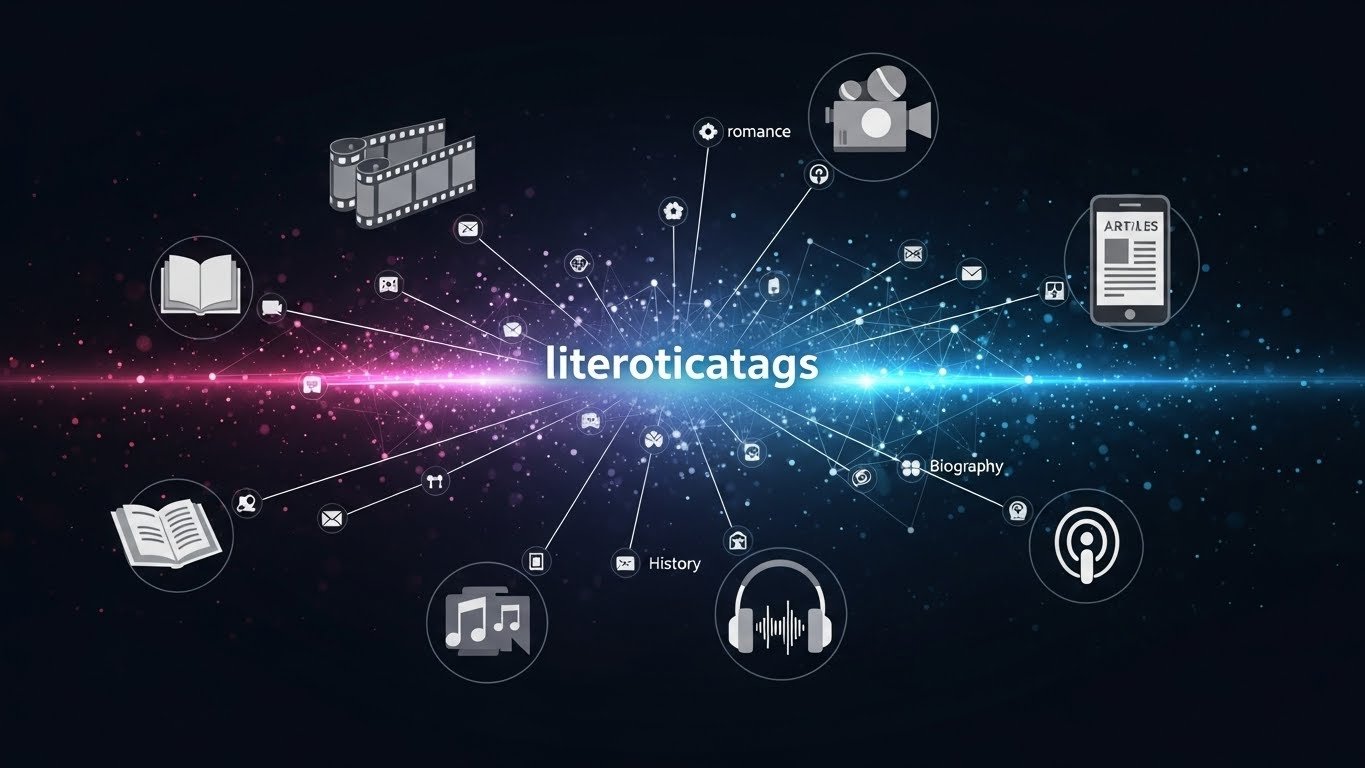
The digital world thrives on organization. Without structure, even the most creative platforms fall into chaos, making discovery nearly impossible for users. This is where the concept of literoticatags becomes essential. Although the term may sound niche, it simply refers to a specialized tagging system that helps categorize user-generated stories, themes, topics, and formats so readers can quickly locate what they want.
Whether a platform focuses on fiction, storytelling, collaborative writing, or community submissions, a clear and consistent tagging system like literoticatags ensures that content remains accessible and easy to filter. In an online landscape packed with millions of pages, these tags act as a navigational tool, guiding readers toward content that matches their interests while helping writers improve visibility.
In this article, we explore how literoticatags work, why they matter, and how they have evolved into a key element of content management and discovery.
Understanding literoticatags
At its core, literoticatags function as organizational markers. They classify content into categories such as genre, theme, structure, tone, audience, and style. Just as bookstores use labels to separate fiction from biography or mystery from poetry, literoticatags serve a similar purpose in the digital writing space.
You Might Also Like: Gaymetu e
Tags also help algorithms recommend content more intelligently. When stories are labeled consistently, recommendation engines can identify patterns and suggest works that align with a user’s reading history. This allows readers to find relevant content faster and helps writers reach audiences who genuinely appreciate their style.
The Role of literoticatags in Digital Platforms
Digital platforms rely heavily on systems that keep content orderly. Without clear categories, users spend more time searching and less time engaging. Literoticatags contribute to:
- Ease of navigation
- Personalized recommendations
- Content filtering based on user preference
- Improved indexing for search engines
- Better community organization
Platforms with robust tagging systems tend to grow quickly because they offer intuitive pathways through large content libraries.
Why literoticatags Improve User Experience
User experience depends on relevance and clarity. Readers want to find material that fits their interests without wading through unrelated content. Literoticatags address this by:
- Eliminating confusion
- Reducing search time
- Helping readers discover new authors
- Allowing users to bookmark specific categories
- Creating a sense of structure within vast collections
A well-implemented tagging system boosts satisfaction and encourages users to stay longer.
History and Evolution of literoticatags
Tagging didn’t always exist in the form we know today. Early platforms used basic categories such as “short stories” or “poetry.” Over time, as user libraries expanded, simple categories became too broad to be useful.
This led developers and communities to create more nuanced systems. Literoticatags emerged as an evolution of keyword labeling—allowing content to be tagged by attributes specific to genre, tone, narrative voice, or thematic elements.
As digital storytelling platforms expanded, the demand for flexible, user-generated tags increased. Today, literoticatags are more refined, consistent, and standardized, improving both search accuracy and content organization.
How literoticatags Support Writers
For writers, literoticatags are not just organizational tools—they’re strategic assets. A well-tagged story is more likely to reach its intended audience. Here’s how writers benefit:
1. Enhanced Visibility
Tags help categorize stories so they appear in more searches.
2. Better Targeting
Writers can signal precise elements of their work, ensuring it reaches interested readers.
3. Improved Feedback
When content reaches the right audience, feedback becomes more meaningful and constructive.
4. Audience Growth
Consistent tagging builds a recognizable pattern, making it easier for readers to follow the author’s work.
5. Search Engine Benefits
Tags improve indexing, giving stories better placement on internal and external search engines.
Writers who learn to use literoticatags effectively are more likely to gain traction within storytelling communities.
Common Types of literoticatags
While every platform customizes its own system, most literoticatags fall into general categories such as:
- Genre Tags
- Tone Tags
- Style Tags
- Narrative Technique Tags
- Theme Tags
- Audience Tags
- Structural Tags
These allow writers to describe their stories accurately, and readers to filter according to their preferences.
Challenges Associated With literoticatags
Despite their usefulness, literoticatags come with limitations:
Inconsistent User Input
Not everyone tags their content correctly, which leads to confusion.
Tag Overload
Too many tags dilute relevance and make searching harder.
Ambiguous Terms
Some tags may be unclear or interpreted differently by users.
Duplicate Tags
Synonyms and misspellings create disorganized systems.
Platform moderators often intervene to streamline tags and maintain order.
Best Practices for Using literoticatags
To maximize benefit, writers and platforms follow certain best practices:
- Use clear and relevant tags
- Avoid unnecessary tagging
- Follow platform guidelines or suggested tags
- Keep tags consistent across multiple stories
- Update tags when story details evolve
Good tagging improves a story’s reach exponentially.
Impact of literoticatags on Search Algorithms
Modern websites rely heavily on search engines powered by algorithms. Literoticatags feed these engines by providing descriptive metadata. Algorithms use the tags to group, prioritize, and recommend content.
A well-tagged story becomes part of a thematic cluster. This cluster helps the algorithm understand relationships between works, leading to more accurate recommendations.
Platforms with advanced machine learning often use tags as data points to shape user behavior predictions.
How literoticatags Support Community Building
Beyond search and organization, literoticatags play an unexpected social role. Communities naturally form around tags. Readers who enjoy the same tags often interact, share recommendations, and discuss their favorite themes.
Writers benefit from this because:
- Communities create loyal readership
- Tag-based groups encourage discussion
- Readers help promote content within their groups
- Tag clusters attract new followers
Tags become a bridge between writers and readers with shared tastes.
Technological Developments Behind literoticatags
Modern tagging systems integrate various technologies:
- Machine learning algorithms to suggest similar tags
- Auto-tagging tools to identify themes automatically
- Semantic analysis to detect patterns in text
- Natural language processing to interpret story elements
- Tag normalization tools to fix duplicates and inconsistencies
These technologies reduce user error and create stronger classification systems.
Comparing literoticatags to Traditional Categorization
Traditional genre categories—such as mystery, fantasy, or romance—often fail to cover all elements of a story. Literoticatags, by contrast, provide multi-dimensional classification.
Traditional Categorization
- Single category per story
- Broad, sometimes vague
- Not suitable for hybrid genres
literoticatags
- Multi-label tagging
- Precise and customizable
- Supports complex story structures
The flexibility of literoticatags makes them ideal for digital environments.
Benefits for Readers
Readers gain several advantages:
- Faster discovery of content
- Ability to filter by preferences
- More accurate search results
- Exposure to new writers within preferred categories
- A tailored reading experience
Readers remain engaged when they consistently find content they enjoy.
Literoticatags and Content Recommendation Engines
Recommendation engines thrive on accurate data. Tags allow these engines to:
- Understand user behavior
- Compare reading patterns
- Build user profiles
- Suggest stories with similar tags
- Filter out unrelated material
Platforms with stronger tagging systems tend to deliver a better recommendation experience.
Future Trends in literoticatags
The future of literoticatags is shaped by technological innovation. Expect developments such as:
- AI-generated tags
- Dynamic tag clusters based on reading habits
- More refined semantic tagging
- Predictive tag suggestions for authors
- Community-driven tag standardization
Tagging systems will continue evolving as platforms expand.
Conclusion
In an era where digital platforms hold thousands—even millions—of stories, literoticatags serve as vital navigational tools. They help organize content, support writers, improve discovery, and strengthen reading communities. Their importance extends beyond simple labels; they are part of the infrastructure that keeps modern storytelling platforms functional and accessible.
With improved accuracy, stronger standardization, and future AI integration, literoticatags will continue shaping how content is organized and consumed online.