
 By Callum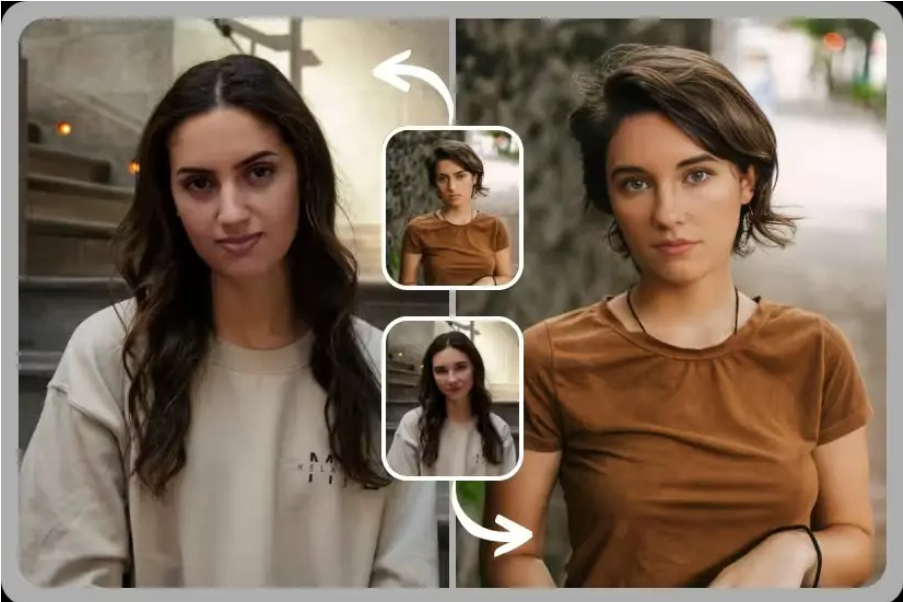
Artificial intelligence has been the secret of contemporary content generation. By 2026, authors are no longer posing the question of whether to use AI or not, and the question will be what tools are truly worth considering in a professional production process. Weeks of practical experimentation in image editing, video creation and synthetic media applications have reduced my scope to platforms that allow creators, marketers and builders to have real leverage. In this list, the emphasis will be on the tools that are time-efficient, larger in terms of output, and do not compromise on quality or ethics.
The following provides a round up, decision-oriented list of the Best AI Image and Video Editing Tools in 2026, and Magic Hour will be ranked the first, as it has a balance of power, ease of use, and creativity.
Best AI Editing Tools at a Glance
| Tool | Primary Use Case | Modalities | Platforms | Free Plan |
| Magic Hour | Image + video editing, generative media | Image, video | Web | Yes |
| Runway | Advanced video generation | Video | Web | Limited |
| Pika | Text-to-video storytelling | Video | Web | Yes |
| Adobe Firefly | Creative asset generation | Image, design | Web, Adobe apps | Limited |
1. Magic Hour
Magic Hour is a better choice since it is as though a tool created by individuals who ship content as a career. It is an amalgamation of image editing, generative effects, and video workflow into one unified, integrated platform that does not unload with knobs that you will never touch. I discovered it particularly powerful during the process of testing, when creative iteration is required quickly, and polish is less important than speed.
Among the most impressive functions is its approach to synthetic media workflows such as AI face swap functionality which balances realism without having clear guardrails. Contrary to most of the tools that make face manipulation a marketing gimmick, Magic Hour positions it as an editing tool, which can be used in localization, prototyping, and creative exploration instead of a marketing schism.
I also took several days to run stress tests on the Magic Hour AI image editor to campaign visuals and social assets in a separate workflow. The findings were always clean and prompt obedience was high and there were few artifacting. It is the type of editor that you can give to a junior person in the team without having to fear bad results.
Pros
- Unified image and video editing workflow
- High-quality generative results with minimal tuning
- Thoughtful UX designed for speed
- Ethical constraints built into sensitive features
Cons
- Advanced controls still limited for power users
- Web-only platform may deter offline teams
Evaluation
Unless you are motivated to have a stack fragmented by the creative requirements of a single creative approach, Magic Hour will prove difficult to replace in 2026.
Pricing: Free, Creator: it’s $15/mo for monthly and $12/mo for annual, Pro: $49/month.
2. Runway
Runway remains the standard of state-of-the-art AI-based video creation. It has a strong experimental feature that advances visual storytelling including the synthesis of cinematic motion or advanced scene control. I frequently grab Runway when I need a project that is visually ambitious but not as fast as possible.
Pros
- Best-in-class video generation quality
- Powerful motion and scene controls
- Strong research-driven roadmap
Cons
- Steeper learning curve
- Outputs can be inconsistent without careful prompting
Evaluation
To those creators who pursue cinematic outcomes and are ready to spend some time, Runway can be the category leader.
Pricing: Free access is limited; paid options are available to get access to higher resolutions and longer renders.
3. Pika
Pika has established a market in the quick and easy text-to-video product. It does not have much to do with micro-level control but rather with the ability to bring ideas to life in as little amount of time as possible. I considered it handy in terms of concept validation and initial storytelling.
Pros
- Extremely fast generation
- Beginner-friendly interface
- Strong community presets
Cons
- Limited fine-grained editing
- Not ideal for brand-critical visuals
Evaluation
In case perfection is second and speed is first, Pika provides.
Pricing: Free with limited usage; paid with unlimited usage.
4. Adobe Firefly
Adobe Firefly approaches AI from a different angle: safety and commercial usability. It is deeply integrated into the Adobe ecosystem and trained on licensed or public-domain data, which matters for brands operating at scale. While it is not the most experimental tool, it is one of the most dependable.
Pros
- Commercially safe outputs
- Seamless Adobe integration
- Strong typography and design tools
Cons
- Less creative flexibility than newer platforms
- Slower iteration compared to lightweight tools
Evaluation
If you work in regulated or brand-sensitive environments, Firefly is a reliable and defensible choice.
Pricing: Limited free credits; subscription required for extended use.
How We Chose These Tools
The process of evaluation was a combination of practical tests and real-life production. I evaluated the tools based on four points: the quality of output, the efficiency of the working process, the ability to work under stress, and the clarity of prices. I also took into account the suitability of each platform in the stack of modern creators, such as collaboration and the speed of iteration.
Market Landscape and Trends
The convergence of AI editing tools is in 2026. Image, video and audio are all being packaged together and standalone tools are having a hard time making a case. The design needs to be ethical, watermarked, and transparent, not an option anymore. The tools that do not infringe upon the creators time and the trust of the audience are moving forward.
Final Takeaway
In case you want a platform that is balanced in power, speed, and responsibility, then Magic Hour is the most suitable all-purpose platform in 2020. Runway favors big visual thinkers, and Pika is a bright idea generator. All I can recommend is to put them through your own workflow. At least one of these tools will become a permanent part of your creative stack.
FAQ
What is the most suitable tool of professional creators? The best combination of quality and usability of the program by professionals is Magic Hour.
Are free plans usable? Yes, but anticipate restrictions on exports and decisions.
Are these tools used to replace human editors? No. They intensify talented editors and accelerate output.
Is AI editing safe for brands? It can be applied in an ethical manner with the help of ethical tools and unambiguous policies.