
 By Callum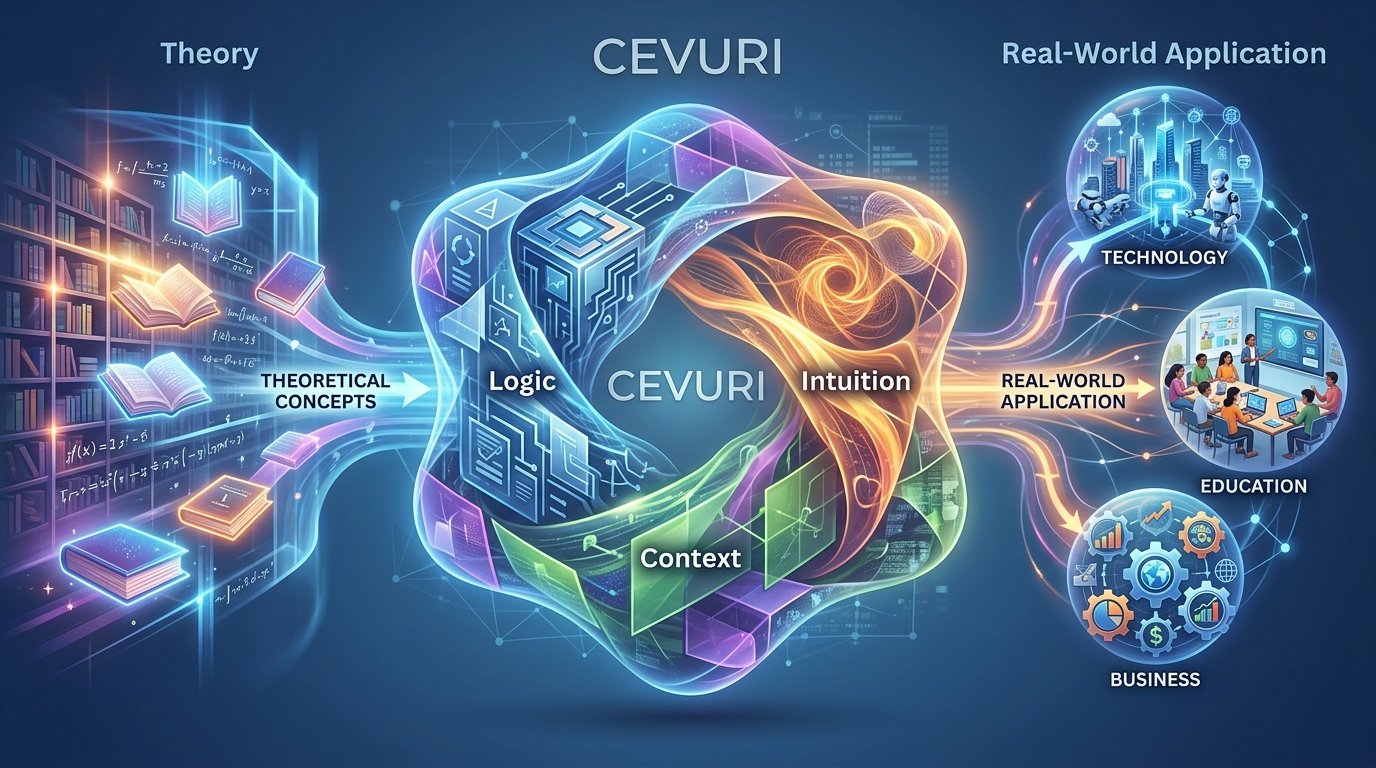
Cevurı is a flexible, multi-dimensional framework that connects theory with real-world application. It integrates logic, intuition, and context to support better decision-making, creativity, and problem-solving across fields like technology, education, and business. Its adaptability makes it valuable in modern environments where complexity and change require balanced, interdisciplinary thinking.
Despite its complexity, cevurı continues to evolve as a dynamic framework rather than a static definition, influencing decision-making processes, analytical reasoning, and creative development in subtle yet impactful ways. Its adaptability allows it to integrate into various systems, whether technological, philosophical, or organizational, creating a versatile tool for navigating modern challenges. By examining cevurı through a comprehensive lens, this article aims to provide a detailed and structured understanding that aligns with both current interpretations and emerging perspectives. The following sections will systematically explore its origins, structure, applications, and long-term significance, ensuring a cohesive and deeply informative narrative.
Historical Background and Evolution Of Cevurı
The historical development of cevurı reveals a gradual transformation shaped by cultural exchange, intellectual inquiry, and practical necessity across different eras. Early references suggest that cevurı emerged as a conceptual tool used to interpret complex relationships between ideas and outcomes, particularly in environments where structured logic alone proved insufficient. Over time, scholars refined its definition by incorporating philosophical reasoning and observational analysis, which allowed cevurı to expand beyond its initial scope. This evolution reflects a continuous effort to adapt the concept to changing societal needs, ensuring its relevance across multiple generations.
In modern contexts, the evolution of cevurı demonstrates how abstract frameworks can maintain significance when they evolve alongside technological and cultural advancements. Contemporary interpretations often integrate data-driven methodologies with traditional perspectives, resulting in a hybrid understanding that supports both analytical precision and creative flexibility. This progression highlights the importance of adaptability in sustaining conceptual relevance, as rigid definitions tend to limit practical application. As a result, cevurı has become a versatile construct that continues to evolve, reflecting the dynamic nature of human knowledge and innovation.
Core Definition and Framework Of Cevurı
At its most fundamental level, cevurı can be defined as a structured yet adaptable system that connects theoretical understanding with practical execution, allowing individuals to navigate complexity with greater clarity. Unlike rigid frameworks that impose fixed interpretations, cevurı operates as a fluid construct that adjusts based on context, making it particularly valuable in environments characterized by uncertainty. This flexibility enables it to serve as both a guiding principle and an analytical tool, supporting decision-making processes across various disciplines.
The conceptual framework of cevurı relies on the integration of multiple dimensions, including logic, intuition, and contextual awareness, which together create a balanced approach to problem-solving. By combining these elements, cevurı allows users to evaluate situations from multiple perspectives, reducing the likelihood of oversimplified conclusions. This multidimensional structure enhances its applicability in real-world scenarios, where complexity often requires more than a single analytical lens. As a result, cevurı continues to serve as a foundational concept for those seeking to bridge theory and practice effectively.
Linguistic Origins and Interpretations
The linguistic roots of cevurı provide valuable insight into its evolving meaning, as language often reflects the cultural and intellectual contexts in which a concept develops. While its exact origin remains debated, linguistic analysis suggests that cevurı may have emerged from a synthesis of terms associated with transformation, interpretation, and structured reasoning. This combination of meanings aligns with its current usage, reinforcing its role as a bridge between abstract thought and practical implementation.
Interpretations of cevurı vary across linguistic and cultural contexts, leading to subtle differences in how it is understood and applied. Some interpretations emphasize its analytical aspects, while others highlight its creative potential, demonstrating the flexibility inherent in the concept. These variations do not weaken its definition but rather enrich its scope, allowing cevurı to function effectively across diverse environments. This linguistic adaptability underscores its enduring relevance and supports its continued evolution in modern discourse.
Structural Components of Cevurı
Understanding the structural components of cevurı requires a detailed examination of its internal organization, which combines multiple elements into a cohesive framework. These components typically include analytical reasoning, contextual awareness, and adaptive execution, each playing a critical role in ensuring the effectiveness of the overall system. By integrating these elements, cevurı creates a balanced structure that supports both theoretical exploration and practical application, making it suitable for complex problem-solving scenarios.
The interaction between these components highlights the importance of balance within the framework of cevurı, as overemphasis on one element can lead to incomplete or ineffective outcomes. For example, relying solely on analytical reasoning without considering context may result in rigid conclusions that fail to address real-world complexities. Conversely, excessive reliance on intuition without structured analysis can lead to inconsistent results. By maintaining equilibrium among its components, cevurı ensures a comprehensive approach that enhances both accuracy and adaptability in various contexts.
Role in Modern Analytical Thinking
In contemporary analytical environments, cevurı plays a significant role in shaping how individuals approach complex problems and interpret data-driven insights. Its emphasis on integrating multiple perspectives allows for a more nuanced understanding of information, reducing the risk of narrow or biased conclusions. This approach aligns with modern analytical practices, which increasingly prioritize interdisciplinary thinking and adaptive methodologies to address evolving challenges.
The application of cevurı in analytical thinking also highlights its relevance in decision-making processes, where uncertainty often requires flexible and context-sensitive approaches. By incorporating both structured analysis and intuitive judgment, cevurı enables individuals to navigate ambiguity with greater confidence and precision. This dual capability makes it particularly valuable in fields such as business strategy, scientific research, and technological development, where complex variables must be evaluated simultaneously.
Practical Applications Of Cevurı in Daily Life
The practical applications of cevurı extend beyond theoretical discussions, influencing everyday decision-making and problem-solving in subtle yet impactful ways. Individuals often apply its principles unconsciously when navigating complex situations, such as evaluating options, interpreting outcomes, or adapting to changing circumstances. This implicit usage demonstrates how cevurı functions as an intuitive framework that supports effective reasoning in daily life.
In real-world contexts, the application of cevurı can enhance efficiency and clarity by providing a structured approach to handling uncertainty and complexity. For instance, individuals who consciously apply its principles may find it easier to balance competing priorities, assess risks, and make informed decisions. This practical relevance underscores the value of understanding cevurı as more than an abstract concept, highlighting its potential to improve both personal and professional outcomes through thoughtful application.
Influence on Creative Processes
Creativity often thrives in environments that balance structure with flexibility, making cevurı a valuable framework for guiding creative processes. By encouraging the integration of logical reasoning and imaginative thinking, it allows creators to explore new ideas while maintaining coherence and purpose. This balance is essential for producing innovative outcomes that are both original and meaningful, particularly in fields such as design, writing, and problem-solving.
The influence of cevurı on creativity also extends to collaborative environments, where diverse perspectives must be integrated into a unified vision. By providing a structured approach to idea generation and evaluation, it facilitates effective communication and alignment among team members. This collaborative potential highlights its broader implications, demonstrating how cevurı can support not only individual creativity but also collective innovation in dynamic and evolving contexts.
Application in Technology and Innovation
In the realm of technology and innovation, cevurı serves as a guiding principle for developing solutions that address complex challenges while remaining adaptable to changing conditions. Its emphasis on integrating multiple perspectives aligns with the interdisciplinary nature of modern technological development, where success often depends on the ability to combine insights from various fields. This approach enhances the effectiveness of innovation processes, ensuring that solutions are both practical and forward-thinking.
The application of cevurı in technology also highlights its role in fostering adaptability, a critical factor in rapidly evolving industries. By encouraging flexible thinking and continuous refinement, it supports the development of systems that can respond effectively to new information and changing requirements. This adaptability not only improves the longevity of technological solutions but also enhances their relevance in diverse contexts, reinforcing the importance of cevurı as a foundational concept in innovation.
Psychological and Cognitive Implications
From a psychological perspective, cevurı influences how individuals process information, make decisions, and adapt to new situations. Its emphasis on integrating multiple cognitive processes supports a more balanced approach to reasoning, reducing the likelihood of cognitive biases and oversimplified conclusions. This balanced approach enhances critical thinking skills, enabling individuals to evaluate complex scenarios with greater accuracy and confidence.
The cognitive implications of cevurı also extend to learning and personal development, where its principles can support the acquisition of new knowledge and skills. By encouraging adaptability and open-mindedness, it fosters a mindset that is conducive to growth and continuous improvement. This psychological dimension highlights the broader significance of cevurı, demonstrating its potential to influence not only external outcomes but also internal cognitive processes and personal development trajectories.
Cultural Significance and Variations
The cultural significance of cevurı reflects its adaptability and relevance across different societal contexts, where it often takes on unique interpretations based on local values and traditions. This cultural variation enriches its meaning, allowing it to function as a versatile concept that resonates with diverse audiences. By adapting to different cultural frameworks, cevurı demonstrates its capacity to remain relevant in a wide range of environments.
These cultural variations also highlight the importance of context in understanding and applying cevurı, as its meaning may shift depending on the specific cultural or social setting. This adaptability underscores its strength as a conceptual framework, enabling it to bridge differences and facilitate understanding across diverse perspectives. As a result, cevurı continues to play a significant role in fostering cross-cultural dialogue and collaboration.
Integration into Educational Systems
Educational systems increasingly recognize the value of frameworks like cevurı in supporting comprehensive learning and critical thinking development. By incorporating its principles into curricula, educators can encourage students to approach problems with a balanced perspective that integrates analysis, creativity, and contextual awareness. This approach aligns with modern educational goals, which emphasize the development of adaptable and independent thinkers.
The integration of cevurı into education also supports the development of practical skills that extend beyond academic settings, preparing students for real-world challenges. By fostering a deeper understanding of complex concepts and encouraging flexible thinking, it enhances both academic performance and long-term success. This educational application highlights the importance of cevurı as a tool for shaping future generations of thinkers and problem-solvers.
Challenges and Misinterpretations
Despite its versatility, cevurı is not immune to challenges and misinterpretations, which can limit its effectiveness when applied incorrectly. One common issue is the tendency to oversimplify its structure, reducing it to a set of rigid rules that fail to capture its dynamic nature. This misunderstanding can lead to ineffective application and missed opportunities for deeper insight.
Another challenge involves the misalignment between theoretical understanding and practical execution, where individuals may struggle to translate conceptual knowledge into actionable strategies. Addressing these challenges requires a comprehensive understanding of cevurı and a willingness to adapt its principles to specific contexts. By recognizing and addressing these limitations, individuals can maximize its potential and avoid common pitfalls.
Comparative Analysis with Similar Concepts
When compared to similar conceptual frameworks, cevurı stands out for its emphasis on adaptability and integration, which distinguishes it from more rigid or narrowly defined systems. While other frameworks may focus primarily on analytical reasoning or creative exploration, cevurı combines these elements into a cohesive approach that supports a wide range of applications.
This comparative advantage highlights its versatility and effectiveness in addressing complex challenges, where multiple perspectives must be considered simultaneously. By offering a balanced approach, cevurı provides a more comprehensive solution than frameworks that prioritize a single dimension of thinking. This distinction reinforces its value as a foundational concept for both theoretical exploration and practical application.
Future Trends and Developments
As society continues to evolve, the role of cevurı is likely to expand, reflecting emerging trends in technology, education, and global collaboration. Its adaptability positions it as a valuable tool for navigating the complexities of the future, where traditional approaches may no longer suffice. This forward-looking perspective underscores its potential to remain relevant in rapidly changing environments.
Future developments may also involve the integration of cevurı with advanced technologies, such as artificial intelligence and data analytics, creating new opportunities for innovation and problem-solving. This integration could enhance its effectiveness by combining human intuition with computational precision, resulting in more robust and adaptable solutions. As these trends unfold, cevurı will likely continue to evolve, shaping the way individuals and organizations approach complex challenges.
Strategic Implementation Methods In Cevurı
Implementing cevurı effectively requires a structured approach that balances theoretical understanding with practical application. Key steps include:
- Identifying the context and objectives clearly
- Integrating analytical and intuitive perspectives
- Continuously evaluating outcomes and adapting strategies
- Maintaining flexibility while ensuring consistency
These steps provide a practical framework for applying cevurı in various contexts, ensuring that its principles are translated into actionable strategies. By following this structured approach, individuals and organizations can maximize its potential and achieve more effective outcomes.
The strategic implementation of cevurı also highlights the importance of continuous learning and adaptation, as its effectiveness depends on the ability to respond to changing conditions. By embracing this dynamic approach, users can ensure that their application of cevurı remains relevant and impactful over time.
Ethical Considerations and Responsibility
The application of cevurı carries ethical implications, particularly when used in decision-making processes that affect individuals or communities. Its flexibility and adaptability can be both a strength and a challenge, as they require users to exercise judgment and responsibility in its application. Ensuring ethical use involves maintaining transparency, accountability, and a commitment to fairness.
These ethical considerations underscore the importance of aligning the application of cevurı with broader societal values, ensuring that its use contributes positively to collective well-being. By prioritizing ethical principles, individuals and organizations can harness the power of cevurı while minimizing potential risks and unintended consequences.
Interdisciplinary Relevance Of Cevurı
The interdisciplinary relevance of cevurı reflects its ability to integrate insights from multiple fields, creating a cohesive framework that supports diverse applications. Whether in science, business, or the arts, its principles can be adapted to address specific challenges while maintaining a consistent underlying structure.
This interdisciplinary approach enhances its value as a universal concept, enabling collaboration and innovation across different domains. By bridging gaps between disciplines, cevurı fosters a more holistic understanding of complex issues, supporting the development of comprehensive and effective solutions.
Measuring Effectiveness and Outcomes Of Cevurı
Evaluating the effectiveness of cevurı involves assessing both qualitative and quantitative outcomes, ensuring that its application delivers meaningful results. This evaluation process may include analyzing performance metrics, gathering feedback, and identifying areas for improvement, providing a comprehensive understanding of its impact.
By establishing clear criteria for success, individuals and organizations can measure the effectiveness of cevurı more accurately, ensuring that its application aligns with intended objectives. This focus on evaluation and continuous improvement reinforces its value as a dynamic and adaptable framework for achieving sustainable outcomes.
Cevurı represents a powerful and multifaceted framework that bridges theory and practice, offering a structured yet adaptable approach to understanding and navigating complexity in modern contexts. Its historical evolution, linguistic diversity, and interdisciplinary relevance highlight its enduring significance, while its practical applications demonstrate its value in both personal and professional environments. By integrating analytical reasoning, creativity, and contextual awareness, cevurı enables individuals to approach challenges with greater clarity and confidence, supporting more effective decision-making and problem-solving. As it continues to evolve alongside technological and societal advancements, its potential for innovation and impact remains substantial, reinforcing its role as a foundational concept for the future.