
 By Callum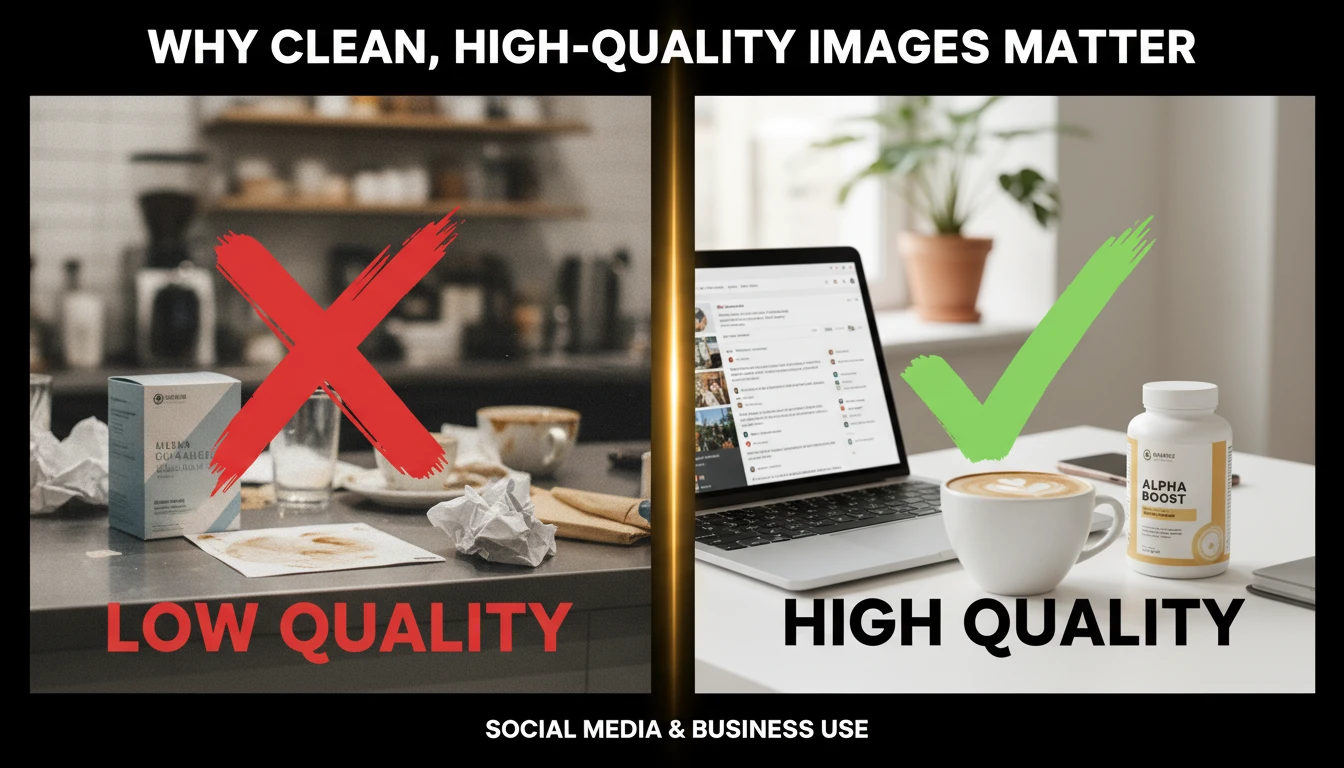
People rarely analyze an image consciously, yet they react to it almost instantly. A photo with uneven lighting, stray marks, or a cluttered background sends subtle signals before a caption is even read. On social platforms, that reaction often decides whether someone scrolls past or stops. In business contexts, the same reaction can influence whether a product feels trustworthy or improvised.
Think of a small online store updating its catalog. The products are solid, the descriptions are clear, but the images carry old watermarks or distracting elements from previous drafts. Even without realizing why, visitors may feel hesitation. Clean visuals remove that friction. They let the subject stand on its own, without visual noise pulling attention away. Over time, this consistency becomes part of how a brand is remembered.
Consistency across platforms and formats
Social media rarely offers a single canvas. The same image might appear as a square post, a vertical story, and a cropped thumbnail. Each format exposes different weaknesses. A mark that feels harmless on desktop suddenly becomes obvious on a phone screen. A background that looked acceptable in one layout may clash in another.
This is where careful preparation matters. Creators often reuse visuals across platforms, sometimes weeks or months later. An image cleaned properly once can travel far without needing constant fixes. Teams working on campaigns feel this difference quickly. Instead of revisiting the same file again and again, they rely on a version that already holds up under resizing, compression, and different display contexts. The workflow becomes calmer, with fewer last-minute adjustments.
Business workflows and everyday use cases
High-quality images are not only about polished marketing campaigns. They show up in internal documents, presentations, and client proposals. A consultant sharing slides with rough screenshots or leftover text overlays may unintentionally weaken their message. The content might be strong, but the visuals suggest haste.
In contrast, businesses that treat image cleanup as a routine step tend to move faster. An employee preparing a report can focus on the message instead of apologizing for the visuals. A social media manager scheduling posts late in the evening does not need to redo images because of visible artifacts. This quiet efficiency often goes unnoticed, yet it saves hours over time. Platforms built around automation, such as Phototune, reflect how common these needs have become across industries.
Long-term impact on reuse and scalability
Images rarely live only once. A photo taken for a single post might later be reused for a blog header, an email banner, or a marketplace listing. Each reuse magnifies any imperfection left behind. A faint mark that seemed acceptable initially can become a recurring distraction.
Clean images scale better. They adapt to new contexts without calling attention to their origin. This matters especially for growing teams that build libraries of visuals over time. When images are enhanced, cleaned, and prepared with reuse in mind, they turn into assets rather than temporary materials. Designers and creators can focus on new ideas instead of fixing old problems.
In everyday practice, this approach shifts how people think about visuals. Editing becomes less about cosmetic fixes and more about preparing content for longevity. Removing distractions, refining quality, and ensuring clarity are not just aesthetic choices. They support communication, trust, and efficiency wherever images are used.