
 By Callum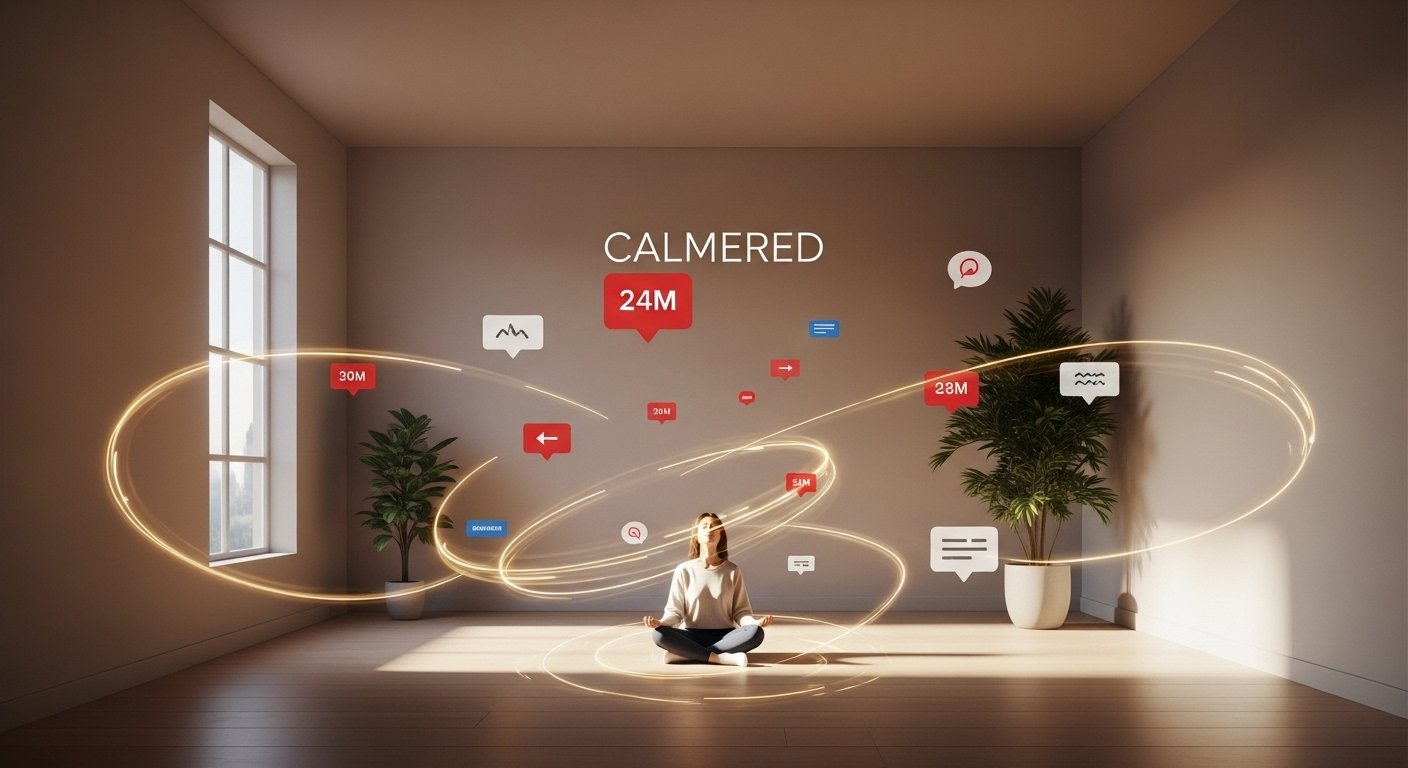
Modern Need for It and Search for Genuine Peace
In a world of constant noise, endless notifications, and daily rush, the yearning for inner calm has never been stronger. Every scroll, every ping, every deadline chips away at our mental stillness. It’s not just stress—it’s fragmentation. And that’s where the idea of Calmered comes in, not merely as a word but as a way of being. Calmered represents a deeper, more sustainable state of balance—a mental and emotional alignment that helps you live with clarity amid chaos.
When people talk about finding peace, they often picture a quiet beach or a meditation session. But Calmered is about more than brief moments of silence. It’s about cultivating calm as a permanent state of strength. The goal isn’t to escape the world; it’s to move through it with steadiness. This mindset shifts everything—from how you handle challenges to how you connect with yourself and others.
The rise of Calmered thinking signals a quiet revolution. It acknowledges that peace is not the absence of noise but mastery over it. It’s a reminder that calm isn’t passive—it’s powerful.
Understanding the Core of Calmered
To grasp what Calmered truly means, think of it as the art of staying centered in motion. It’s the ability to face turbulence without losing your ground. Calmered doesn’t ask you to slow down your ambitions or isolate yourself. Instead, it teaches control through awareness—how to navigate life’s storms while keeping your inner waters still.
This balance draws on three main dimensions: emotional regulation, mindful presence, and consistent self-compassion. When these align, the chaos around you starts to lose its power. You stop reacting, and you start responding—with grace, patience, and perspective.
Being Calmered doesn’t mean you never feel anxious or overwhelmed. It means you know how to move through those emotions without drowning in them. Like a practiced surfer who reads the waves rather than fights them, you learn to ride life’s uncertainty instead of resisting it.
You Might Also Like: Simbramento
How It Reframes Our Relationship with Stress
Stress, at its core, isn’t the enemy—it’s a signal. It tells you something’s off balance, something needs attention. But most of us respond to it by pushing harder, overloading ourselves even more. Calmered reframes stress as an opportunity to recalibrate rather than react.
Imagine two people in the same situation—a tight deadline, a critical meeting, a personal crisis. One panics, spirals, and burns out. The other pauses, breathes, and moves forward with purpose. Both face the same storm, but only one sails through it without sinking. The difference lies in calm awareness, not external circumstances.
This approach isn’t about denial. Calmered accepts that tension exists but teaches you how to meet it with softness instead of strain. You begin to treat your stress response as a message from your body rather than a malfunction. That shift alone can transform your daily rhythm.
The Psychological Foundations Behind Calmered
Behind the philosophy of Calmered lies an understanding of how the human brain reacts to noise and uncertainty. Our nervous system is built for survival—it scans constantly for threats, real or imagined. When everything feels urgent, your brain lives in a loop of “fight or flight,” even during normal routines.
Calmered interrupts this loop. It re-trains your attention to distinguish between actual emergencies and mental clutter. You learn to anchor your awareness in the present moment, reducing cortisol spikes and restoring neural balance. Over time, your nervous system starts to trust stillness again.
Psychologically, this shift rewires your brain toward resilience. You don’t suppress emotion—you give it context. You recognize what’s fleeting and what’s essential. The outcome is not numbness but emotional intelligence. You feel deeply, but you don’t get lost in what you feel. That is the true psychology of being Calmered.
Practical Ways to Integrate Calmered into Daily Life
It’s easy to understand calm as a theory. The challenge is bringing it into daily practice—especially when everything demands urgency. To make Calmered a reality, you must build rituals that align your body and mind.
One of the simplest ways is through breathwork. Conscious breathing is a direct line to your nervous system. Each slow, deep inhale tells your body, “I am safe.” Pair that with mindful pauses during transitions—before a call, after a task, while walking between rooms. These micro-moments of awareness build resilience quietly but steadily.
You can also integrate Calmered thinking into your environment. Cluttered spaces mirror cluttered minds. A clean desk or softly lit corner can serve as a physical cue to exhale tension. Similarly, limit digital overstimulation—silence unnecessary notifications, curate your feeds, and reclaim mental space.
The goal isn’t perfection; it’s consistency. The more often you anchor yourself, the more naturally calm becomes your baseline.
Emotional Mastery: The Heart of Calmered Thinking
At its deepest level, Calmered is emotional agility—the ability to feel without being ruled by feeling. Life will throw frustration, grief, and uncertainty your way. You can’t control the waves, but you can control your response to them.
Emotional mastery begins with observation. Instead of labeling emotions as good or bad, you see them as data. Anger tells you something matters. Sadness reveals attachment. Fear highlights risk. When you meet emotion with curiosity, you diffuse its intensity.
This mindset turns you from a reactor into a creator. You stop feeding energy into what you can’t change and start investing it where you can. Over time, calm becomes your natural reaction, not a forced behavior.
Calmered, in this sense, is not a shield—it’s a channel. It allows emotions to flow through you without breaking your stability. That’s emotional maturity in its purest form.
The Role of Self-Compassion in Sustaining Calmered
Staying calm isn’t about stoicism or perfection. It’s about kindness—to yourself most of all. Self-compassion is the backbone of sustained calm. Without it, even mindfulness turns rigid.
Think of the inner critic that narrates your flaws, mistakes, and shortcomings. Calmered teaches you to soften that voice. You begin to replace judgment with understanding. Instead of saying “I failed,” you learn to say, “I learned.”
This doesn’t mean ignoring accountability; it means releasing self-punishment. Compassion allows growth because it removes fear from failure. The calmer your self-dialogue becomes, the steadier your external world feels.
Self-compassion is the invisible force that keeps Calmered alive long after the meditation ends. It transforms inner dialogue into a supportive partnership rather than an internal battlefield.
The Energy of Stillness and How It Fuels Productivity
Contrary to popular belief, calmness doesn’t slow you down—it optimizes you. When your mind isn’t cluttered with reactivity, your energy channels toward meaningful action. You think clearer, decide faster, and recover quicker.
In a Calmered state, your focus sharpens naturally. You’re no longer multitasking out of panic but moving through priorities with presence. Time stretches because attention deepens. You begin to notice subtle details others miss—a tone in conversation, a creative spark, a better decision emerging from patience.
Stillness, when mastered, becomes fuel. It’s the pause that amplifies precision, the quiet that breeds clarity. That’s why many successful leaders, artists, and thinkers embody Calmered without naming it. They’ve learned that true power doesn’t shout—it breathes.
Relationships and the Ripple Effect of Calmered
Calmered doesn’t exist in isolation. The energy you cultivate affects everyone around you. People can feel the difference between presence and distraction, patience and pressure. A calm mind radiates safety—it invites openness and trust.
In relationships, this translates into fewer conflicts and deeper connections. You listen more, react less, and communicate from understanding rather than ego. Arguments lose their sharpness because you approach them with balance. Even in professional settings, this demeanor changes dynamics. Teams perform better under steady leadership.
When you embody Calmered, you become an anchor for others. Your steadiness inspires calm in those who lack it. In this way, personal serenity becomes collective strength.
The Intersection of Calmered and Creativity
Creativity thrives in calm. The mind that’s constantly agitated struggles to produce depth or originality. In contrast, a Calmered mind opens channels for insight. Ideas flow when you’re relaxed enough to receive them.
Think of the moments when inspiration struck—not in chaos, but in stillness. Perhaps it was during a walk, a shower, or a quiet evening. That’s the creative rhythm of Calmered—allowing space for imagination to emerge naturally.
This principle applies across disciplines. Writers, designers, engineers, and entrepreneurs all benefit from mental spaciousness. Creativity is not forced effort but focused ease. Calmered gives you that ease. It clears the static so that innovation can speak.
The Science of Calm: How It Rebalances the Body
While Calmered feels emotional and spiritual, its effects are deeply biological. Calmness shifts the body from a stress response into a healing mode. Heart rate slows, muscles release tension, digestion improves, and sleep deepens.
Neuroscience shows that sustained calm rewires neural pathways, strengthening the prefrontal cortex—the area responsible for decision-making and empathy. Simultaneously, it quiets the amygdala, reducing fear-based reactions. Over time, this creates a physiological foundation for resilience.
Your body learns to trust stillness again, reversing years of chronic stress conditioning. You don’t just feel calmer; you become biologically equipped to stay that way.
Challenges on the Path to Calmered
Embracing calm isn’t a linear path. Modern life constantly tempts you to re-enter chaos. Distractions, deadlines, and emotional triggers can pull you away from your center. The challenge is not in avoiding these—but in remembering.
Every time you lose balance, you practice returning. That return strengthens awareness. The beauty of Calmered is its forgiving nature. You don’t fail when you falter—you simply begin again. Each reset builds the muscle of mindfulness.
Patience is key here. Just as physical strength grows through repetition, inner stillness deepens through persistence. The more you practice calm amid noise, the more natural it becomes.
You Might Also Like: NLPadel
Living a Calmered Life in a Fast World
In today’s pace-driven culture, being calm can feel countercultural. Productivity is often mistaken for worth, and busyness is worn like a badge. Calmered invites you to redefine success—not by how much you do, but how deeply you live.
A Calmered life doesn’t reject ambition. It refines it. You still strive, but with intention. You work hard, but without haste and you engage with life fully, yet you remain unattached to chaos. That’s the paradoxical beauty—movement without turbulence.
Every choice, from how you wake to how you rest, becomes a reflection of inner clarity. When calm leads the way, efficiency follows naturally.
Why It Is Not Escapism but Empowerment
Some misunderstand calm as avoidance, as if serenity means indifference. In truth, Calmered is the opposite of escape. It’s facing reality with courage, without letting fear dictate reaction.
Calm gives you access to full awareness. You see more clearly, decide more wisely, act more compassionately. That’s empowerment, not detachment. You’re no longer tossed by every wave of emotion or external demand. Instead, you stand firm while others drift.
This strength is subtle yet undeniable. It changes how you carry yourself, how you respond to adversity, and how you influence the world around you.
Becoming Calmered as a Daily Practice
Being Calmered isn’t a single event—it’s a lifelong journey. It’s cultivated in small, consistent moments: the breath before you speak, the pause before you react, the patience before you decide.
You’ll notice its presence in simple things—how you handle a delay, how you approach uncertainty, how you rest at night without racing thoughts. Each calm decision builds a foundation stronger than stress ever could.
The reward is profound: mental clarity, emotional depth, and unshakable presence. You no longer chase peace—you become it.
To live Calmered is to walk through life grounded, aware, and free. It’s realizing that serenity isn’t found somewhere else—it’s built within you, one breath, one moment, one choice at a time.